AI Agent Development
The case for agents
What an AI Agent Does That a Chatbot Cannot
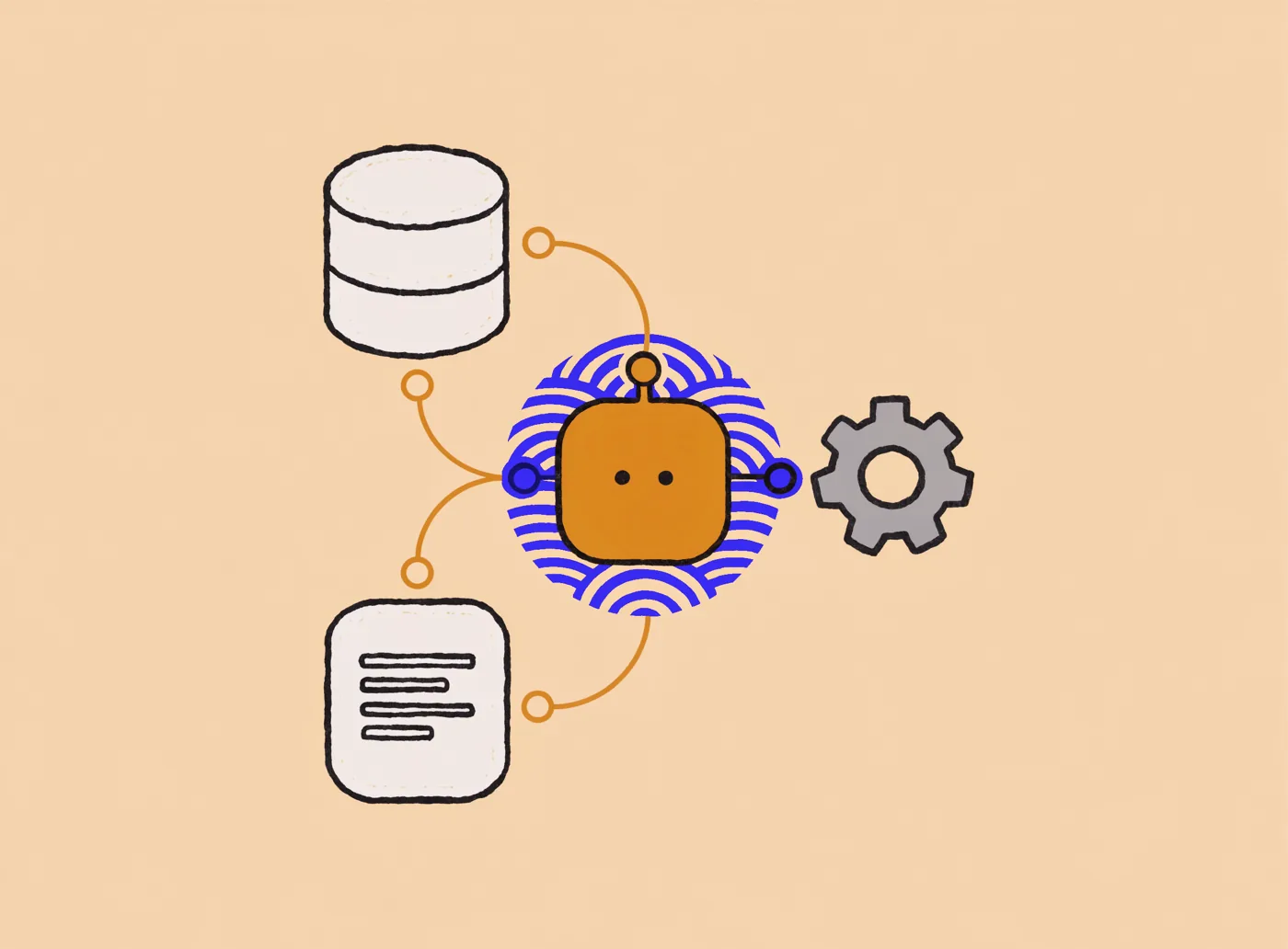
Most businesses only ever meet AI as a chatbot: it answers a question and stops. It can't reach your data layer, so it never sees the order or the account the question is actually about. It can't take an action, so a person still does the work. And what you type into it lives on someone else's terms.
- You control the data: Stored in your database, in your cloud, under retention rules you set rather than a vendor's.
- It reads your company data: The agent works against your CRM, your database, your internal tools, so answers come from your records instead of a guess.
- It acts on your behalf: Replying to an email, updating a record, posting to your social accounts. The task finishes instead of coming back to you.
- It works across steps: A chatbot answers one prompt. An agent takes a task, picks the tools it needs, and runs it through to done.
The agent components in AI behind this are simple enough: tools, memory, and permission. A chat window is still the front door, someone typing a request in plain language. The AI agent business case is everything that happens after that.
What we build
Agentic AI Development, Built Around Your Workflow
Every company already runs on processes, and most of them work well enough. They're just slow in the same places: someone reading, someone copying information between systems, someone waiting on an approval. That's where agentic AI development pays off, on the process you already have rather than a new one.
- RFPs and proposals: drafted from your past submissions and your real pricing.
- Hiring: applications screened against the role, shortlisted, scheduled.
- HR and internal requests: policy questions answered from your own handbook, not a generic one.
- Client communication: replies drafted, follow ups chased, everything logged in the CRM.
- Marketing operations: briefs, variants, and scheduling run against your calendar.
This is what intelligent business process automation actually means: the process stays yours, the manual steps inside it go away. Intelligent process management applied to a workflow your team already trusts will beat rolling out another tool nobody adopts.
Building the product itself rather than an agent inside one? We also do custom software development and MVP development.
Integration
AI Integration Services That Work With the Systems You Already Run
Most of the tools your business already runs on were never built with AI in mind. And the information that matters most is often not in a tool at all. It sits in spreadsheets, shared drives, and inboxes, where nothing can reach it. Artificial intelligence integration services close that gap.
- Your systems of record: we connect agents to Salesforce, HubSpot, Zendesk, SAP, and Postgres, reading and writing where the data already lives.
- Permissions and identity: the agent acts as a scoped user with defined limits, so it can only reach what you decide it should.
- Work that lands in the queue: Zendesk intelligent triage routes and tags a ticket before anyone opens it, and Zendesk AI ticketing drafts the first reply.
- Built to keep running: monitored, logged, and versioned, so a changed API or a new model doesn't quietly break it.
Artificial intelligence systems integration is unglamorous and it's the whole job. It's the difference between a demo everyone agrees is impressive and AI integration services that put something in front of your team they'll still be using in six months.
Our stack
The Models and Tools Behind Our Custom AI Development
We build your AI layer model agnostic. The model is a component, not a foundation, so nothing above it is tied to one provider. If pricing jumps or a provider has a global outage, swapping the model underneath is a configuration change, not a rebuild.
Around it sits the rest of the system: connections to the external platforms you already run, storage and retrieval for your own data, and cloud infrastructure sized to what you actually need. That is what keeps custom AI software working long past launch.
Models
- Claude
- GPT
- Open Weight Models
Agent Frameworks
- Tool Use
- MCP
- CLI
- Orchestration
Data & Retrieval
- Vector Search
- SQLite
- Postgres
Cloud & Infrastructure
- Amazon AWS

- Google GCP

- Hetzner
- Webhooks & APIs
Interaction design
Conversational AI Integration People Will Actually Use
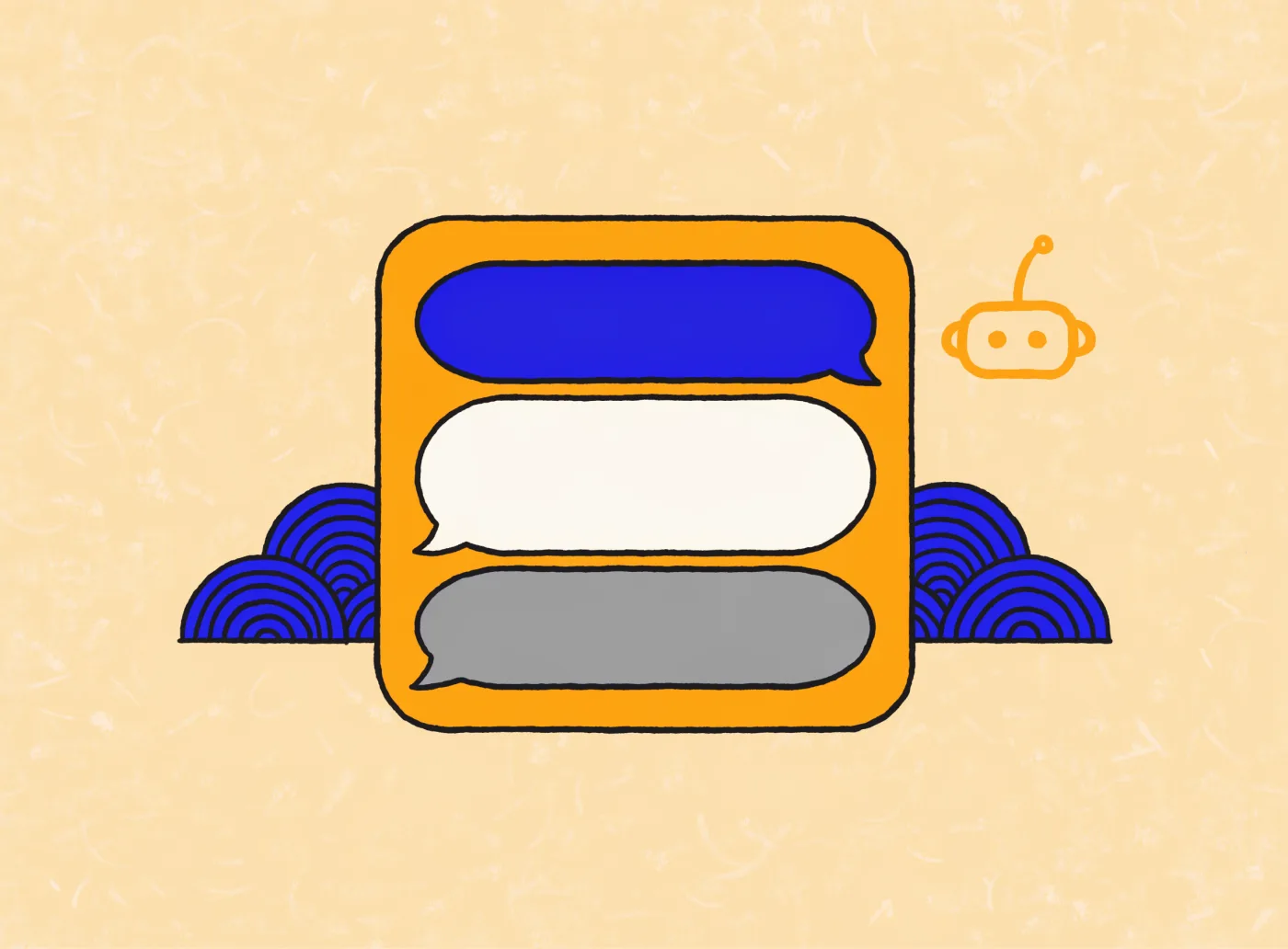
The interface is a decision, not a default. We choose it around the specific use case and around how you actually prefer to work. Sometimes that's a Slack integration, because it's where your team already spends the day. Sometimes it's WhatsApp, because that's where your customers already are.
And sometimes there is no interface at all. An invisible worker that runs overnight, gets through the queue, and emails you what it did by the time you're back at your desk. Our chatbot integration services cover the visible end of this, from a widget inside your own product to integrating ChatGPT into the tools your team already opens every day.
We work out what you need and what you'd prefer before anything gets built, then we implement to that. The interface should fit the way you already work, not the other way around.
Security and data
What the Model Sees, and What It Never Does
Most AI use inside a business happens on someone else's terms. Work gets pasted into a consumer chat product, and it lands under a retention and training policy nobody on your team has actually read. It's rarely one dramatic leak. It's your client list, your pricing, your process, and the alpha of your business, handed over a few prompts at a time.
We build the layer underneath so that stops happening. Your documents, your embeddings, your logs, and every conversation the agent has sit on infrastructure you own. None of it is uploaded to a model provider. What actually reaches a model is scoped to the minimum that one request needs, under commercial API terms with no training rights attached, not the consumer terms sitting behind a chat window.
And when nothing is allowed to leave your network at all, we run open weight models on your own hardware, so there is no third party in the path. If the privacy of your data, your clients, and the alpha of your business still matters to you, that is what this layer is for.
Our process
From Use Case to Live Agent: How We Build
Four stages, from picking the use case worth automating through to an agent running in production with us watching it.
Discovery
We start by finding the right first use case rather than the most exciting one. That means a process your team repeats often, at enough volume to be worth automating, and where the output can be checked. Picking well here is most of why an agent ends up earning its place.
Design
Before anything gets built we decide the boundaries: what the agent is allowed to do, which systems and data it can reach, where a person stays in the loop, and what happens when it is unsure. Those limits are the design, not a setting added at the end.
Build
We build against your real cases rather than sample data, and evaluate every change on them. Prompts, tools, and retrieval get iterated until the agent holds up on the awkward inputs, and you see it working in demos along the way.
Launch & Support
We roll the agent out and monitor it from day one, which is how we learn where it actually struggles and tighten the guardrails around those spots. Models change and your data changes, so we stay on it and keep it working as both move.
Who we build for
Who Gets the Most Out of an AI Agent
A company at a different stage gets a different outcome from an AI agent. For a solo founder, it's leverage: one person covering the work of a small team, so the parts that used to eat the day run on their own. For a team of two to ten, it's the process nobody has time to own, the support queue, the follow ups, the admin, handled before it piles up.
For a company past a hundred people, the shape changes again. The work is already documented and already at volume, so the win is consistency across a process that touches a lot of people, inside systems that have real permissions and real compliance behind them. Same technology, three different jobs.
Which is why we start with an assessment rather than a build. We look at where you are, what actually costs you time, and what a first agent should do, then we implement the approach that fits your stage instead of the one that sounds impressive.
Proof
AI Agents We Have Shipped
AI agent case studies are being written up
We are writing up the agents we put into production: the process they took over, the systems they connect to, and the hours they gave back. Those stories land here soon. Until then we can walk you through comparable builds on a call and connect you with the clients directly.
AI Agent Development FAQs
Let's Build Your First Agent
Tell us which workflow eats the most hours in your week. We will map what an agent can take over, what stays with your team, and what it has to touch in the systems you already run.